From lunch tray to lifelong health: WHO sets global standards for school meals
UN Health
|
一月 27, 2026
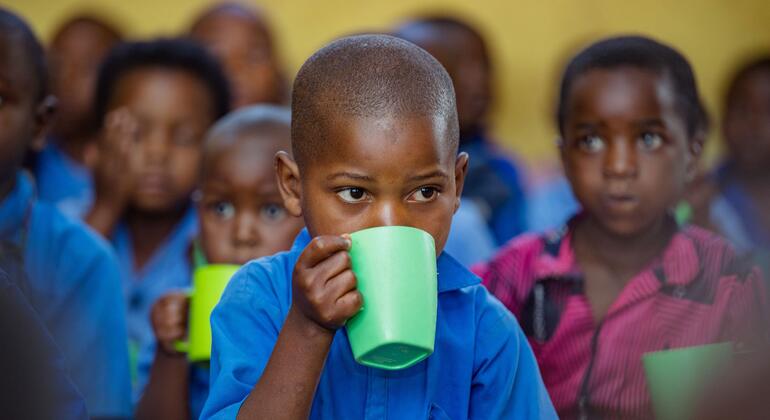
For the first time ever, the World Health Organization (WHO) is providing recommendations for healthy and nutritious food in schools around the world.
© UNICEF/Habib Kanobana
A young child attends school in Burera District, Rwanda.
Facebook
Twitter
Print
Email
For the first time ever, the World Health Organization (WHO) is providing recommendations for healthy and nutritious food in schools around the world.
The UN agency’s new global guidance on evidence-based policies and interventions shows that healthy food in schools can help children develop healthy dietary habits for life.
“The food children eat at school, and the environments that shape what they eat, can have a profound impact on their learning, and lifelong consequences for their health and well-being,” said Tedros Adhanom Ghebreyesus, WHO Director-General.
Overweight childhood obesity and obesity are rising globally, while undernutrition remains a persistent challenge.
Child obesity levels surpassed underweight cases around the world for the first time in 2025.
Around one in 10 school-aged children and adolescents were living with obesity last year, and one in five – or 391 million – were overweight.
Additionally, a recent WHO report revealed that diabetes now affects over 800 million people globally and one in 6 pregnancies.
As of October 2025, 104 Member States had policies relating to healthy school food, but only 48 countries had policies that restrict the marketing of foods high in sugar, salt or unhealthy fats, according to WHO.
For the millions of children that spend a large chunk of their day at school, the food environment they are exposed to can shape their future dietary habits.
“Getting nutrition right at school is critical for preventing disease later in life and creating healthier adults,” said Tedros.
WHO recommends increasing the availability of healthy foods and beverages while reducing unhealthy foods. That means limiting free sugars, saturated fats and sodium, while offering more whole grains, fruits, nuts and pulses.
Other recommendations include implementing ‘nudging interventions’ – changes in the packaging, placement or portion size of foods designed to encourage children to select healthier foods.
The organisation will support countries with technical assistance, knowledge-sharing and other collaborative measures, to realise the new guidance.
The World Health Organization (WHO) has issued a detailed statement regretting the United States decision to leave the UN agency, and declaring that it will leave both the US and the world less safe as a result.
Beverages like sugary drinks and alcohol are too accessible and cost too little in most of the world – helping fuel obesity, diabetes, cancer and injury, the World Health Organization (WHO) warned on Tuesday.
This article was originally published by UN Health. For more details, images, and references:
Read Full Original Article ↗