Sudan war leaves millions hungry and displaced as health system nears collapse
UN Health
|
ينا 10, 2026
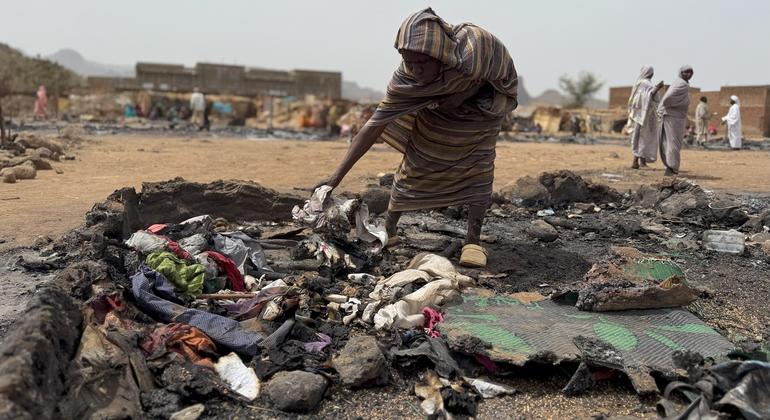
Sudan’s protracted conflict has spiralled into one of the world’s most severe humanitarian crises, with hunger, displacement and the collapse of basic services exacting a daily toll on civilians.
© UNICEF/Mohammed Jamal
A woman searches through the burnt remains of her shelter at a displacement camp in Darfur, Sudan.
Facebook
Twitter
Print
Email
Sudan’s protracted conflict has spiralled into one of the world’s most severe humanitarian crises, with hunger, displacement and the collapse of basic services exacting a daily toll on civilians.
UN agencies warn that nearly three years of sustained violence, restricted humanitarian access and shrinking funding have pushed Sudan into what they describe as the largest humanitarian emergency in the world.
An estimated 33.7 million people – around two thirds of the population – are expected to need humanitarian assistance in 2026. More than 20 million people now require health assistance, while 21 million face acute food insecurity.
The conflict erupted in April 2023 following a power struggle between the Sudanese Armed Forces (SAF) and the paramilitary Rapid Support Forces (RSF), plunging the country into a civil war that has spread from the capital Khartoum to Darfur, Kordofan and other regions.
The fighting has devastated infrastructure, fractured state institutions and left civilians exposed to widespread violence, displacement and deprivation.
Repeated ceasefire efforts have failed, and large swathes of the country remain inaccessible to humanitarian actors due to insecurity, bureaucratic constraints and ongoing hostilities.
© UNICEF/Ahmed Mohamdeen Elfatih
Patients receive treatment in a tent outside a hospital in Khartoum, as Sudan’s health system comes under severe strain from attacks, shortages, disease outbreaks and natural disasters.
A health system on the brinkAccording to the World Health Organization (WHO), Sudan’s health system has been pushed close to collapse by ongoing fighting, mass displacement and repeated attacks on medical facilities. More than one third of health facilities nationwide are non-functional, cutting millions off from essential and lifesaving care.
Since the conflict began, WHO has verified 201 attacks on healthcare, resulting in 1,858 deaths and 490 injuries. Such attacks violate international humanitarian law and place patients, caregivers and health workers at grave risk.
“One thousand days of conflict in Sudan have driven the health system to the brink of collapse,” said Shible Sahbani, WHO Representative in Sudan. “Under the strain of disease, hunger and lack of access to basic services, people face a devastating situation.”
Despite insecurity and access constraints, WHO continues to support lifesaving services, having delivered more than 3,300 metric tonnes of medicines and medical supplies worth around $40 million. It also supported cholera vaccination campaigns and helped millions access care through hospitals, primary health centres and mobile clinics.
This article was originally published by UN Health. For more details, images, and references:
Read Full Original Article ↗