Can traditional medicine strengthen modern healthcare? An expert weighs in
UN Health
|
дек 18, 2025
Ginger and cinnamon are more than just ingredients. Along with other spices, their medicinal value is gaining both attention and legitimacy.
© UN-REDD/Leona Liu
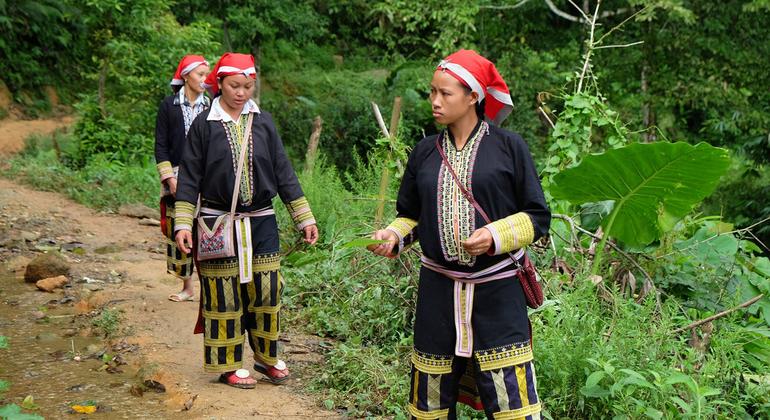
Members of the ethnic Dao minority in Lao Cai Province, Viet Nam, go into the forest to pick and gather medicinal herbs and plants.
Facebook
Twitter
Print
Email
Ginger and cinnamon are more than just ingredients. Along with other spices, their medicinal value is gaining both attention and legitimacy.
Exploring evidence-based uses of traditional medicine, like ginger to treat nausea, is one of the topics at the second World Health Organization (WHO) summit dedicated to traditional, complementary and integrative medicine (TCIM), taking place in India this week.
While most WHO member States report that 40 to 90 per cent of their populations use traditional medicine, a meagre one per cent of global health funding supports research in this field. Additionally, a WHO survey showed regional imbalances in the per cent of countries that have a national policy on TCIM.
Why has such little funding been allocated to traditional medicine? And is traditional medicine a treatment, a lifestyle or something else?
To find out, UN News spoke to Rabinarayan Acharya, Director General of India’s Central Council for Research in Ayurvedic Sciences (CCRAS) which collaborates with WHO to advance research in the field.
This interview has been edited for length and clarity.
© Courtesy of Rabinarayan Acharya
Rabinarayan Acharya is the Director General of India's Central Council for Research in Ayurvedic Sciences (CCRAS).
UN News: How did you get into the field of traditional medicine?
Rabinarayan Acharya: My entry into traditional medicine was shaped early at home. My father was formally trained both in Ayurveda and Sanskrit at a reputed Sanskrit institution in Puri, Odisha, and I grew up exposed to classical texts, philosophy and scholarly traditions. Odisha's strong living heritage of Ayurveda instilled in me a deep respect for Ayurveda as a knowledge system, not just a treatment modality. This foundation, combined with my science background and honours in Botany naturally led me to pursue Ayurveda as a career focused on research, evidence generation and teaching.
UN News: Is Ayurveda a lifestyle or a treatment?
Mr. Acharya: Ayurveda is both a way of life and a system of medicine, but its scope extends far beyond either in isolation. At its core, Ayurveda emphasises healthy living through appropriate lifestyle practices (Vihara), dietetics (Ahara) and ethical conduct (Sadvritta). These principles are designed to maintain homeostasis, prevent disease, and promote long-term well-being rather than merely address illness after it occurs. When illness does occur, Ayurveda offers well-structured therapeutic measures aimed not only at symptom relief but at restoring systemic homeostasis.
This holistic orientation aligns closely with conventional public health priorities, such as disease prevention, healthy ageing and management of chronic lifestyle-related disorders.
This article was originally published by UN Health. For more details, images, and references:
Read Full Original Article ↗